vault-journal
The Difference Between a Chair and a Lounge Chair
March 4, 2026 · Vault N*
People use "chair" and "lounge chair" interchangeably. They're not the same thing. The difference isn't just size — it's purpose. And understanding that purpose changes how you think about the piece you need.
A chair is for doing
A dining chair supports you while you eat. An office chair supports you while you work. A desk chair, a bar stool, a side chair — they all share the same design principle: keep the body upright and supported for a task.
The seat is firm. The back is straight or slightly reclined. The height puts you at the right level for a table. You sit in a chair to do something — and when you're done, you leave.
A lounge chair is for being
A lounge chair has no task. There's no table it needs to match, no desk it needs to sit under. It exists for one purpose: comfort as an end in itself.
The design reflects this. The seat is lower — typically 38-42cm instead of 45-48cm. The back reclines further. The proportions are wider, deeper, more enveloping. A lounge chair doesn't keep you upright. It lets you settle.
This is why a lounge chair occupies a different place in a room — and in your life. It's the reading chair. The thinking chair. The chair you sink into after dinner and don't leave until it's time for bed.
What to look for in a lounge chair
Seat depth. A lounge chair should let you sit back fully without your feet dangling. Deeper seats (55cm+) support the thighs and encourage a relaxed posture.
Arm height. Lower arms feel more relaxed. They let you drape an arm over the side or tuck your legs up. High arms feel more structured — supportive but less free.
Back angle. A slight recline (10-15 degrees) is comfortable for conversation. A deeper recline (15-25 degrees) is better for reading and rest. The right angle depends on how you plan to use the chair.
Weight and presence. A lounge chair should feel substantial. It's not something you push aside — it's something you arrange the room around.
Four approaches
Every lounge chair in the Vault N* collection answers the same question differently: what does comfort look like?
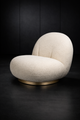
The Elora answers with sculpture. The bouclé shell on a brushed brass swivel base creates a piece that's as much visual as it is functional. The swivel adds a dimension of freedom — you're not fixed to one direction. You turn toward the conversation, toward the window, toward whoever just walked in.
The Maelor answers with warmth. Solid walnut legs ground the piece. The sculptural armrest invites your hand. The bouclé seat softens the structure. It's the chair for people who want comfort with character.
The Orlina answers with volume. Low, round, and enveloping — a single form that holds its shape and yours. There are no edges. No angles. Just a continuous curve that wraps around you.
The Talia answers with restraint. Clean lines. Minimal form. Maximum comfort with minimum visual weight. For rooms where the chair should complement, not compete.
Where to place it
A lounge chair doesn't belong at a table. It belongs in a moment:
Next to a window. Natural light, a book, an hour with no agenda. This is the lounge chair's natural habitat.
Across from the sofa. It creates a conversation grouping without the formality of a second sofa. One person on the sofa, one in the chair — it's balanced but relaxed.
In a corner. A lounge chair with a floor lamp creates a destination. The corner stops being dead space and becomes the best seat in the room.
In the bedroom. A lounge chair next to the bed is where you put your clothes tonight and read your book tomorrow morning. It's the piece that makes a bedroom feel like a room, not just a place to sleep.
The chair you keep
The right lounge chair becomes your chair. Not the household's — yours. The spot you claim every evening. The shape that fits your body because it's shaped to your habits.
That's the difference between a chair and a lounge chair. A chair serves a function. A lounge chair serves you.
Explore the Vault N* lounge chair collection: Elora, Maelor, Orlina, and Talia.