vault-journal
How to Choose a Sofa That Lasts a Decade
February 18, 2026 · Vault N*
A sofa is one of the few purchases where you'll notice the quality difference every single day. A good one disappears into your life — comfortable, reliable, always right. A bad one reminds you constantly: the cushion that sags, the frame that creaks, the fabric that pills after six months.
Choosing a sofa that lasts a decade isn't about spending more. It's about knowing what to look for.
Start with the frame
The frame is the skeleton. If it fails, everything fails. And most people never think about it because it's invisible under the upholstery.
Hardwood frames last. Kiln-dried hardwood — oak, beech, walnut — is the standard for furniture that's built to endure. The kiln-drying removes moisture, preventing warping and cracking over time.
Engineered wood is acceptable in some places. Plywood panels for the base or back are fine if they're thick enough (12mm+). Particle board or MDF in a sofa frame is a red flag — it weakens under repeated stress.
How to test: Lift one corner of the sofa. If the opposite corner lifts with it, the frame is rigid and well-constructed. If it sags or flexes, the frame is weak.
Understand the cushion construction
The cushion is what you feel. It's also what degrades fastest in a cheap sofa.
High-resilience foam. Density matters more than thickness. A thin, high-density foam cushion will outlast a thick, low-density one by years. Look for foam density of 30kg/m³ or higher.
Foam wrapped in fibre. The best cushion construction combines a high-resilience foam core with a layer of polyester or down fibre wrapping. The foam provides support and shape retention. The fibre provides softness and that satisfying "sink."
All-down cushions feel luxurious but require daily plumping and lose their shape over time. They're high-maintenance. For a decade-sofa, foam-core with fibre wrap is the most practical choice.
What to avoid: Cushions that feel soft in the showroom but have no resistance when you push into them. That initial softness becomes permanent compression within a year.
Choose the right fabric
Every fabric is a trade-off between beauty, durability, and maintenance.
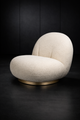
Bouclé. Dense bouclé is one of the most durable upholstery fabrics available. The looped construction resists compression and bounces back. It's also warm, textured, and inviting. The trade-off: it can snag on sharp objects. Choose a tight, dense weave for longevity.
Full-grain leather. The most durable option overall. It improves with age, resists moisture, and develops a patina that adds character. The trade-off: it's the most expensive option and shows scratches (though many consider this a feature).
Performance fabrics. Modern synthetic fabrics designed for durability and stain resistance. They're practical for families with young children. The trade-off: they lack the tactile quality and character development of natural materials.
What to avoid: Any fabric that feels thin, papery, or overly smooth. If you can see the weave threads clearly when you stretch the fabric, it's too loosely woven for long-term use.
Consider the proportions
A sofa that's wrong for your room will never feel right, no matter how well it's made.
Seat depth. Standard is 50-55cm. Deep seating (60cm+) is more lounge-like — great for relaxing, less suitable for upright sitting. The Varello offers generous depth for rooms designed around comfort.
Seat height. Standard is 42-45cm. Lower seats (38-40cm) create a more relaxed, modern feel but are harder to get up from. Higher seats are more practical for older users.
Overall length. Measure your room. Then measure it again. A sofa that's 10cm too long for the space will dominate the room in a way that never stops bothering you.
Arm width. Wide arms eat into seating space but offer a place to rest a cup or a book. Narrow arms maximise seating. The Selene balances this with sculpted arms that are functional without being bulky.
The modularity question
If you're buying for a decade, consider what might change. A modular sofa like the Luna Arc adapts to different rooms, different layouts, and different household sizes. It's an investment in flexibility.
A fixed sofa is perfect if you're confident in your space. A modular is insurance against change.
The real test
Sit on it for ten minutes. Not thirty seconds — ten full minutes. Shift positions. Lean into the arm. Put your feet up. If you're in a showroom, ignore the salesperson hovering. If you're buying online, check the return policy and order with the intention of spending a full evening on it before deciding.
A sofa you'll keep for a decade should feel right after ten minutes. Not exciting — right. Excitement fades. Rightness stays.
Every sofa in the Vault N* collection is built for the long view. Explore the collection.