vault-journal
Oak, Walnut, Brass: A Guide to Furniture Frames
March 18, 2026 · Vault N*
The frame is the part of the furniture you never think about — until it fails. But in well-designed pieces, the frame isn't just structural. It's expressive. The material you choose for the frame shapes the character of the piece as much as the upholstery.
Oak: the quiet anchor
Oak is the material of permanence. It's been used in furniture for centuries — not because it's fashionable, but because it works. Dense, strong, resistant to wear, and beautiful in its simplicity.
Character. Oak has a prominent grain pattern — long, flowing lines that give the wood visual movement. The colour ranges from pale honey to warm golden, deepening slightly with age and light exposure.
Durability. Oak is one of the hardest common furniture woods. It resists dents, scratches, and compression. An oak frame will maintain its structural integrity for decades without reinforcement.
Ageing. Oak mellows over time. The colour warms, the grain becomes more pronounced, and the surface develops a subtle sheen from use. It doesn't demand attention — it simply improves.
The Sentinal Sectional uses a solid oak frame that's visible at the base and arms. The oak grounds the piece — literally and visually. Against the soft bouclé upholstery, the frame provides structure and contrast. It says: this piece is built on something solid.
Walnut: warmth with depth
If oak is the quiet anchor, walnut is the warm embrace. It's a darker, richer wood with a complexity that oak doesn't attempt.
Character. Walnut grain is more varied than oak — swirling, sometimes figured, with natural colour variation from creamy sapwood to deep chocolate heartwood. No two pieces of walnut look the same.
Warmth. There's a reason walnut is associated with luxury interiors. Its dark tones create warmth without heaviness. It pairs naturally with both light and dark upholstery, making it one of the most versatile frame materials.
Durability. Walnut is slightly softer than oak, but still well within the range of suitable furniture woods. It's strong enough for structural use and develops a beautiful, lustrous patina with hand oils over time.
The Maelor Lounge Chair features solid walnut legs that are as much a design element as a structural one. The sculptural quality of the legs — the way they taper and meet the seat — wouldn't work in a lighter wood. Walnut's depth gives the legs presence. They don't just support the chair. They define it.
Brass: the living accent
Brass is fundamentally different from wood. It's a metal alloy — copper and zinc — and it behaves like one. It's rigid, heavy, cold to the touch, and reflective. Used well, it creates contrast and focus in ways that wood alone cannot.
Character. Freshly finished brass has a warm, golden tone — brighter than walnut but warmer than chrome. Brushed brass (the finish we use) has a matte texture with visible grain lines from the brushing process. It's warm without being shiny.
Patina. Unlike wood, which ages gradually and uniformly, brass ages visibly and distinctively. Over months, it darkens in areas of contact and maintains its original tone in protected areas. This creates natural contrast — the piece develops its own map of use.
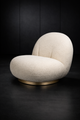
Weight. A brass base adds significant mass to a piece. This isn't just aesthetic — it's functional. A chair on a brass base doesn't tip, rock, or slide. It stays exactly where you put it.
Contrast. Brass against bouclé is one of the most effective material combinations in contemporary furniture design. The cold against the warm. The hard against the soft. The reflective against the absorbent. Each material makes the other more itself.
Choosing your frame
The frame material should match the room and the role:
Oak for rooms that value permanence and understatement. Living rooms, family spaces, rooms where the furniture needs to work for everyone. Oak doesn't compete — it supports.
Walnut for rooms that value warmth and character. Studies, bedrooms, intimate spaces where the furniture is part of the atmosphere. Walnut brings a room together without dominating it.
Brass for rooms that value contrast and focal points. Modern living rooms, dark interiors, spaces where the furniture is a design statement. Brass demands attention — and rewards it.
What they share
Despite their differences, the best frame materials share three properties:
They age well. Oak mellows. Walnut deepens. Brass patinas. None of them degrade — they evolve.
They're honest. You can see what they are. There's no veneer, no coating, no printed grain pattern. The material is itself, fully exposed.
They're repairable. A scratch on oak can be sanded. A mark on walnut can be oiled. A tarnish on brass can be polished — or left. These are materials that forgive mistakes and reward maintenance.
That's the foundation of good furniture. Not just what sits on top — but what holds it all together.
Explore frames across the collection: oak in the Sentinal, walnut in the Maelor, brass in the Elora. View all.