vault-journal
The Case for Made-to-Order Furniture
June 12, 2025 · Vault N*
There's a version of furniture shopping that most people know. You walk into a showroom. You sit on something. You check the price. If it fits, it ships in a week. It's efficient. It's convenient. And for most purchases, it works.
But some pieces aren't meant to work that way.
The showroom problem
Mass-produced furniture is designed to sell fast. The materials are chosen for cost. The dimensions are standardised. The finish is applied in minutes, not hours. And the moment you buy it, someone else in your city is buying the same piece, in the same fabric, for the same room.
There's nothing wrong with that — if the piece doesn't matter to you. But the moment it does, the model breaks.
When you're furnishing a room that you'll live in for years — a living room you'll raise your evenings in, a study where your best ideas will land — you want something that was made with the same intention you're bringing to the space.
That's where made-to-order changes everything.
What made-to-order actually means
It doesn't mean slow. It doesn't mean complicated. It means your piece is built after you commit to it — not before.
Here's what that looks like in practice:
Materials are selected, not grabbed. Every batch of bouclé weaves differently. Every slab of marble has a unique vein pattern. When a piece is made to order, the maker selects materials for your piece — not for a warehouse of identical units.
Construction follows the design. In mass production, speed is the priority. Corners get reinforced with staples instead of joinery. Foam gets thinner because thinner foam ships cheaper. In made-to-order, the construction follows the original design intent. If the designer specified hand-stitched seams, they stay hand-stitched.
Quality control is singular. Your piece is inspected as a single object — not as one of three hundred on a line. Every stitch, every curve, every surface gets the attention it deserves because there's only one to attend to.
The 6–8 week question
The most common hesitation: "But I have to wait."
Yes. A made-to-order piece typically takes 6–8 weeks. That sounds long until you consider what's happening during those weeks:
- Raw materials are being sourced and selected - A frame is being built by hand - Upholstery is being cut, fitted, and stitched - The piece is being finished and inspected
Compare that to the alternative: a piece that was built months ago, shipped across an ocean in a container, stored in a distribution centre, and delivered to you with a scratch that nobody noticed because nobody was looking.
The wait isn't a bug. It's proof that someone is building something specifically for you.
Why limited editions matter
At Vault N*, we take this a step further. Most of our pieces aren't just made to order — they're made in limited editions. A design runs for a set number of units. When the edition is complete, the design is sealed. It moves to the Archive.
This isn't artificial scarcity. It's intentional design. Limited runs allow us to:
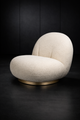
- Maintain material quality. The specific bouclé we source for the Selene isn't available in unlimited quantities. When the fabric is gone, the edition closes. - Preserve the design. Every piece in a limited edition shares the same material batch, the same production conditions, the same finishing standard. Consistency across the edition is part of the value. - Respect the maker. Our production partners are small workshops, not factories. Limited runs mean they can give each piece the attention it needs without being pressured into scale.
The furniture that stays
There's a pattern we see with every customer who receives a made-to-order piece: they stop looking.
When something was made for you — when you chose it, waited for it, and received it knowing that every detail was attended to — it doesn't get replaced in three years. It doesn't get moved to the guest room when a trend changes. It stays.
That's the real case for made-to-order. Not that it's exclusive. Not that it's expensive. But that it's the kind of furniture you stop thinking about replacing.
The Luna Arc doesn't need to be swapped out next season. The Selene won't look dated in five years. They were designed to age with you — and built with the patience to make that possible.
Vault N* is a curated collection of luxury furniture, made to order, limited by design. Explore the collection.