vault-journal
Brass Patina: Embrace the Change or Polish It Away?
September 16, 2025 · Vault N*
Brass is a living material. The moment it's exposed to air, it begins to change. For some, that's unsettling. For others, it's the entire point.
What patina is
Patina is the thin layer of oxidation that forms on brass over time. It's a chemical reaction between the copper in the alloy and the oxygen, moisture, and oils in its environment. The result is a gradual shift in colour — from bright gold to warm amber to deep, honeyed bronze.
This isn't corrosion. Corrosion destroys. Patina protects. The oxidation layer actually seals the surface beneath it, preventing deeper degradation. Brass that's been allowed to patina is, in many ways, more durable than brass that's constantly polished back to bright.
The design choice
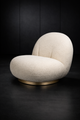
When we designed the Elora Lounge Chair, the brushed brass base wasn't chosen for its shine. It was chosen for what it becomes.
A freshly finished brass base has a controlled, matte warmth — brushed, not mirror-polished. Over months of use, the areas you touch most (the base where you pivot, the edges where your feet rest) develop a slightly different tone than the untouched surfaces. The piece develops contrast. It becomes dimensional in a way that no finish can replicate.
This is brass doing what brass does. And it's beautiful.
If you want to preserve the original finish
Some people prefer the original brushed finish. That's valid. Here's how to maintain it:
Dust regularly. A soft, dry cloth removes surface dust before it traps moisture against the brass.
Wipe fingerprints. Oils from your skin accelerate patina in specific spots. If you want even ageing, wipe the base down with a slightly damp cloth every few weeks.
Use a brass-safe cleaner sparingly. Products designed for brushed brass (not mirror-polished brass) can slow the patina process. Apply with a soft cloth, following the grain of the brushing. Never use abrasive cleaners or steel wool — they'll scratch the brushed texture.
Avoid lacquer. Some guides recommend clear-coating brass to freeze its appearance. We don't recommend this. Lacquer yellows over time, can peel, and creates an artificial sheen that contradicts the warmth of brushed brass.
If you want to embrace the patina
Do nothing. That's it.
Live with the piece. Let your hands oil the surfaces they touch. Let the air do its work. Over a year, you'll notice the brass warming. Over three years, you'll notice depth — areas of light and dark that map exactly to how you use the piece.
The only thing to avoid is moisture pooling. Don't place drinks directly on brass surfaces without a coaster, and wipe up any water that collects at the base. Standing moisture can create uneven, blotchy oxidation rather than the smooth, gradual patina you want.
The argument for impermanence
We live in an era of permanent finishes. Powder-coated metals that look the same in year ten as in year one. Anodised aluminium that never changes. There's a place for that. But there's also a place for materials that carry time.
A brass base that has aged alongside its owner tells a story that a powder-coated base never can. It says: this piece has been here. It has been used. It has been cared for — or deliberately left to evolve. Either way, it's real.
That's why we use brass. Not because it stays perfect, but because it doesn't have to.
The Elora Lounge Chair features a brushed brass swivel base designed to patina with grace. View the Elora.